VACUUM LIFTING EQUIPMENT RENTAL · OPERATOR INCLUDED
Glass Lifting Equipment Rental in Vancouver, Lower Mainland, and Across British Columbia
Glazing robots, mini cranes, material carts, vacuum lifters, curved-glass lifters and counterbalance beams, with a trained operator on every job.
Rental equipment fleet
All equipment →









Glass Lifter Rental, Glazing Robots, and Vacuum Lifting Equipment
Choose the Right Glass Lifting Equipment for the Job
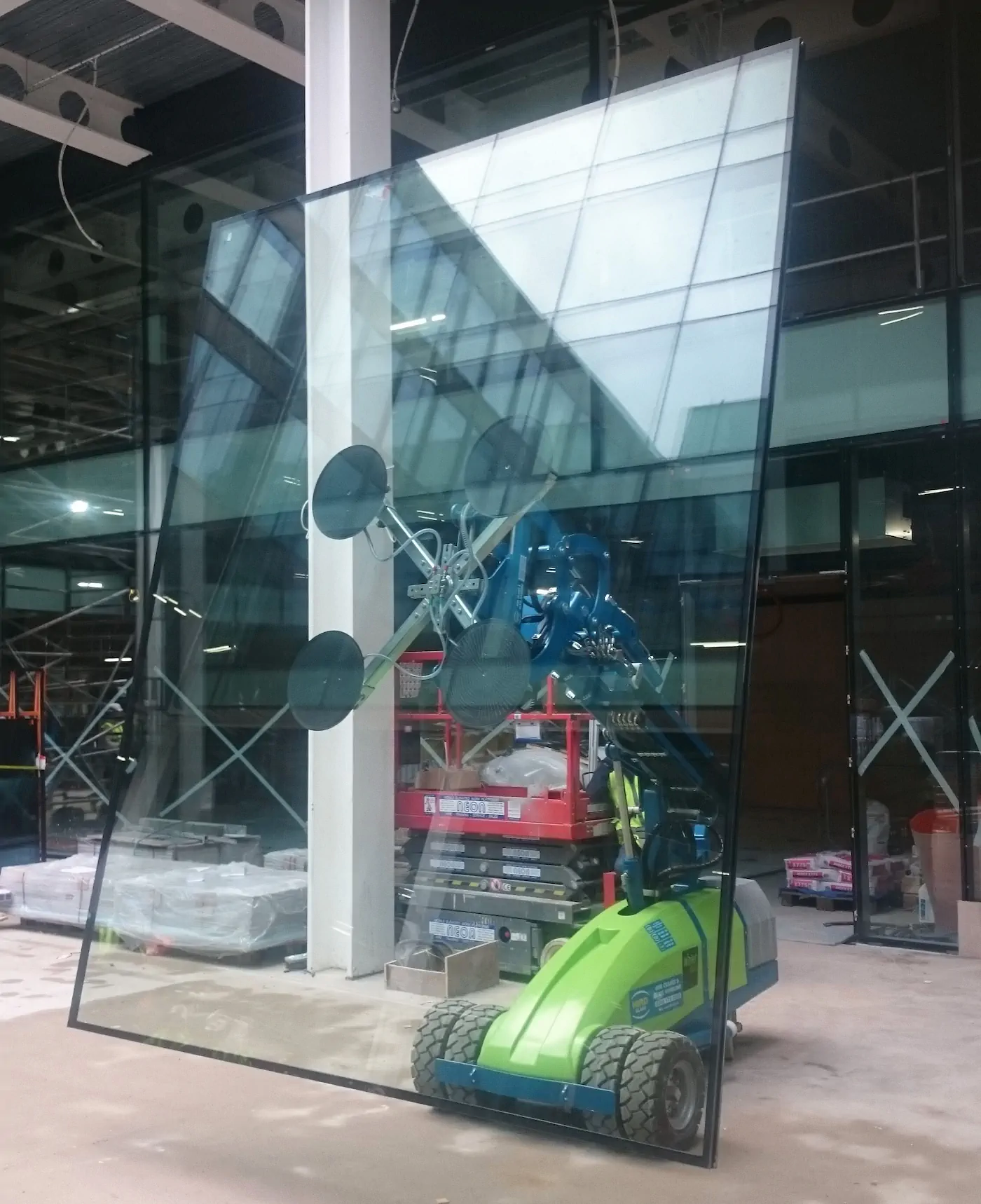
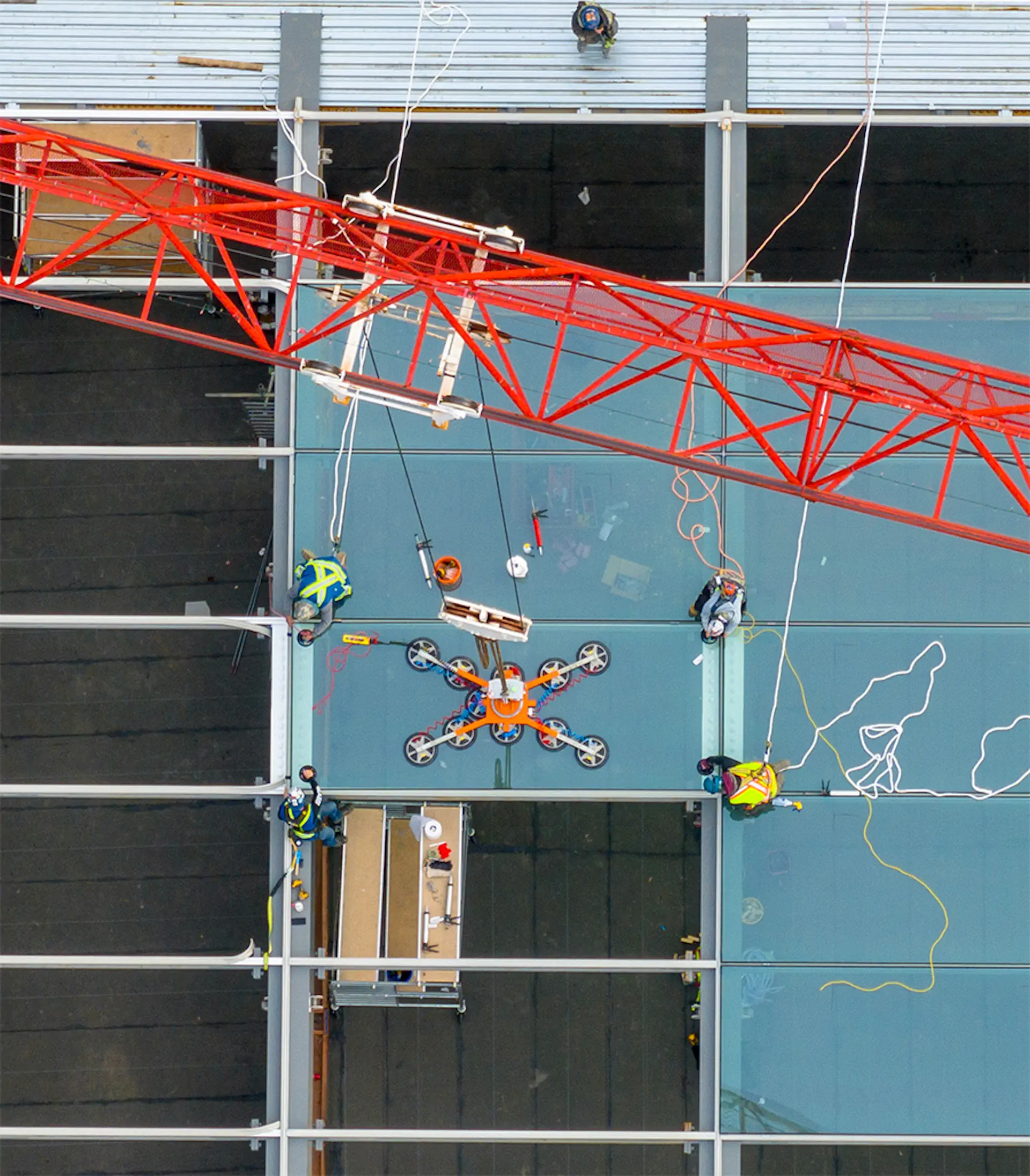
Pick and Place rents glazing robots, vacuum lifters and counterbalance beams for glass work where manual handling is no longer the right tool: storefronts, curtain wall, skylights, oversized insulated units, heavy non-porous panels, restricted-access interiors, and installs under canopies, balconies and soffits. The Lasius mini crane and the ErgoMover material cart cover the loads that are not glass, such as steel sections and drywall stacks.
Daily, weekly, and monthly terms available to suit any project timeline.
Our team reviews your lift plan and recommends the right equipment for the job.
A trained operator comes with every rental. Regular customers can have their own crew trained on our machines for future rentals.
Looking to own? Winlet glazing robots, the Lasius and the ErgoMover are available to buy or lease. Call us to discuss options.
Glazing robots, mini cranes, material carts, vacuum lifters and counterbalance beams.
We deliver and collect across Greater Vancouver and the Lower Mainland.
Technical support is available throughout your rental period to keep your project moving.
All equipment is inspected, certified, and rigged in accordance with applicable BC safety codes.
WHAT WE LIFT
What our equipment handles
Vacuum lifters grip any smooth, non-porous surface, which covers most architectural glass, stone and metal panels. The Lasius winch and the ErgoMover cart take the site materials that suction cannot hold.
– Flat glass of all standard thicknesses, including single, double, and triple glazing.
– Insulated glass units (IG units) for residential and commercial windows.
– Tempered, laminated, and coated low-E glass.
– Curved and shaped architectural glass.
– Curtain wall panels and facade units.
– Skylight and overhead glazing.
– Stone slabs including granite, marble, quartz, and engineered stone.
– Metal panels, including aluminum composite material (ACM) and architectural metals.
– Cladding panels on commercial buildings.
– Drywall stacks, steel sections, pipes and other long stock, on the ErgoMover cart.
– Steel members and machine components, on the Lasius winch.
GLAZING & PANEL LIFTING
Common applications
Vacuum lifting equipment covers most commercial and residential glazing jobs where manual handling is unsafe or impractical. If your job involves heavy panels, restricted access, overhead installations, rough terrain, tight corridors, or loads that are not glass, the right machine is in the fleet and ready to rent.
Storefront glass replacement and new installs
Curtain wall and facade work
Skylight, canopy, and overhead glazing
Installs under balconies, soffits, and canopies
Restricted-access interior glazing
Rough terrain and sloped sites
Curved architectural glass
Stone slab and panel handling for fabricators
Lifting over obstacles and below floor level
Drywall, steel and site materials
SERVICE AREA
Where we work
Based in Greater Vancouver, with project work throughout British Columbia. Equipment shipments to Alberta, Saskatchewan, Ontario, and Quebec for multi-week installations. For locations outside the Lower Mainland, contact us with your project dates, and we will confirm availability and logistics.

Vancouver and the Lower Mainland
The primary service area is where the fleet runs day to day. Projects across Vancouver, Burnaby, Richmond, Surrey, Coquitlam, Langley, Delta, North Vancouver, West Vancouver, New Westminster, and Abbotsford. Industrial zones around Tilbury Island, Annacis Island, Campbell Heights, and the downtown core are regular stops.
Across British Columbia
For project work outside Metro Vancouver, the fleet mobilizes across BC. Common destinations include Squamish, Whistler, the Sunshine Coast, Vancouver Island, the Okanagan, and the Interior. Transport adds a day or two to each end of the engagement — book earlier rather than later, particularly in high season.
Other Canadian Provinces
Equipment can be shipped by rail from Vancouver to project sites in Alberta, Saskatchewan, Ontario, and Quebec. This is a planned mobilization that works best for projects running two weeks or longer. Pick and Place handles freight and operator logistics. If you cannot source the right machine locally, contact us early with your project dates and scope.
Frequently asked questions
What is a glazing robot?
A glazing robot is a compact, battery-powered machine that grips glass or other smooth non-porous panels with vacuum suction pads, then lifts, tilts, rotates, and places the load under operator control. It replaces manual carrying on panels that are too heavy or too awkward for a crew, and on many sites, it replaces a crane setup entirely. The Winlet 600 lifts up to 600 kg / 1,323 lb, and the tracked Winlet 1000 Crawler ER lifts up to 1,000 kg / 2,205 lb.
How much can a glazing robot lift?
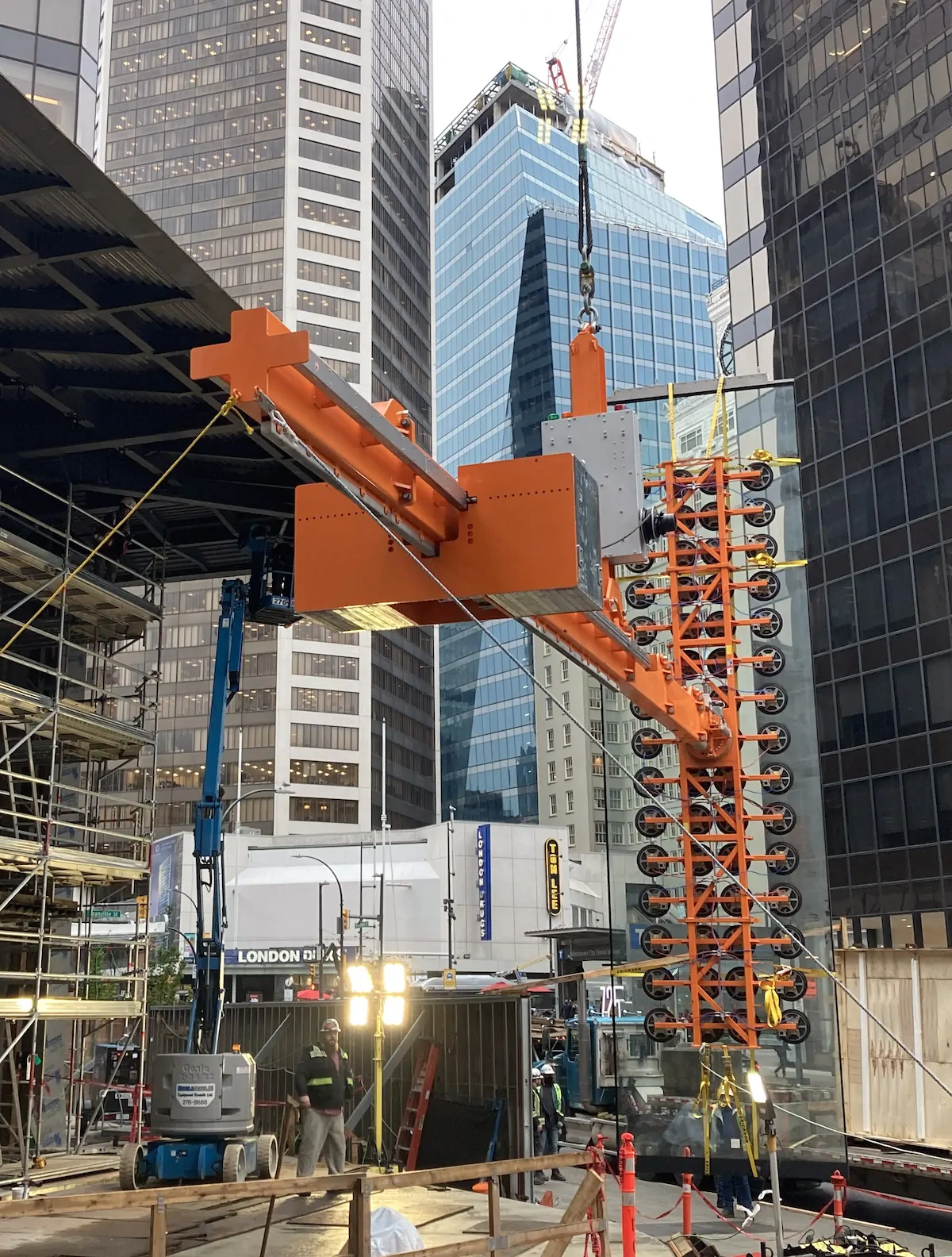
The Winlet 600 lifts up to 600 kg / 1,323 lb, reduced to 300 kg / 661 lb at maximum extension. The Winlet 1000 Crawler ER lifts up to 1,000 kg / 2,205 lb. For heavier panes, crane-hung vacuum lifters are rated up to 1,200 kg / 2,646 lb (OKTOPUS GL-M 1200 G) or 1,270 kg / 2,800 lb (Wood’s MR1611LDC with the 16-pad frame). The counterbalance beam is rated 1,200 kg / 2,646 lb with a glass lifter and 1,500 kg / 3,307 lb on its load hook.
Can a glazing robot fit through a standard doorway?
It depends on the clear opening. The Winlet 600 is 890 mm / 35 in wide (1,260 mm / 50 in on twin tires), so every doorway, corridor and turn on the route must clear that width with the door leaf open or removed. Send the dimensions in mm / in with your enquiry, and we will confirm the route before we mobilize.
What is the maximum lift height?
The Winlet 600 lifts to 3,300 mm / 130 in / 10.8 ft, measured to the centre of the yoke. The Winlet 1000 Crawler ER lifts to 6,050 mm / 238 in / 19.8 ft with the cups horizontal, and its cups reach 3,780 mm / 149 in / 12.4 ft out from the front of the machine. For higher placements, the lifters are used together with a crane, a telehandler, or the building’s permanent hoisting infrastructure.
Can a tracked glazing robot work on stairs, slopes, or rough ground?
Yes, within limits. The Winlet 1000 Crawler ER levels automatically to ±15° longitudinal and ±14° lateral and works without outriggers. It weighs 2,980 kg and is 1,460 mm / 57.5 in wide at its narrowest, and whether a given slope, set of stairs, soft surface or suspended slab suits it is assessed per route. Send the route details and we will check.
Can you install glass under a balcony, soffit, or canopy?
Yes. That is what the counterbalance beam (OKTOPUS GGA 1500) is for. With a glass lifter it is rated 1,200 kg / 2,646 lb at up to 2.10 m / 6.9 ft overhang, and its longest overhang in that arrangement is 3.35 m / 11.0 ft. The rated load falls as the overhang grows, so send the setback with your enquiry.
Can a glazing robot replace a crane?
Often, yes, on lifts within its rating and height. The Winlet 1000 Crawler ER handles many picks that would otherwise wait on crane availability, street closures, and a certified crane crew. On very heavy or very high picks, the crane stays in the plan, and our vacuum lifters and counterbalance beam do the precision work at the hook. Send the lift details, and we will tell you which side of that line your job sits on.
Can a mini crane lift over an obstacle or below floor level?
Yes. The Lasius 1.5t is a battery-powered mini crane with a hydraulic wire winch of up to 32 m / 105 ft, rated 800 kg / 1,764 lb on a double line and 400 kg / 882 lb on a single line. It sets a load past an obstruction or lowers it through an opening to a lower level, and the line setup is confirmed for each job. At 890 mm / 35 in wide with no engine exhaust, it can work inside a building once the floor support is checked for the machine, the load and the lifting gear.
What does the ErgoMover carry?
The ErgoMover Lift & Go 360° Wireless is a battery-powered cart for drywall stacks, steel sections, pipes and other building materials, driven by radio remote with no drawbar. It carries up to 1,500 kg / 3,307 lb, counting any supports on the deck, lifts the deck 150 mm / 5.9 in onto trestles, and rotates it through 360°.
Will an ErgoMover fit through our doorway or into an elevator?
Empty, the cart is 701 mm / 27.6 in wide and 1,702 mm / 67.0 in long. The loaded width and length, the turning space and the elevator capacity must also suit the route, so send the measurements with your enquiry.
Can a vacuum lifter handle laminated, triple-pane, or coated glass?
Yes, in most cases. The fleet handles standard, laminated, tempered, triple-pane, and coated low-E glass. Some specialty coatings need longer release times when setting the panel down, so we confirm pad configuration and release behaviour during the quote when the material is non-standard.
Do these machines lift stone slabs and metal panels?
Yes. The high-capacity vacuum lifter handles stone slabs (granite, marble, quartz, engineered stone) up to 1,200 kg / 2,646 lb, and the Wood’s MR1611LDC panel lifter handles cladding and architectural metals up to 1,270 kg / 2,800 lb with the 16-pad frame. Vacuum suction works on any smooth non-porous surface, which covers most fabricated stone, metal sheet, and ACM used in construction.
Is an operator included in the rental?
Yes. The included operator is our standard model. The operator runs the machine, handles the rigging, and places the panel; your crew positions, seals, and finishes the install. That division of labour keeps the day on schedule and the panel in one piece. Regular customers can also have their own crew trained on a machine, so later rentals can run without our operator.
Do you provide WorkSafeBC documentation and insurance certificates?
Yes. Certificates of insurance and WorkSafeBC clearance letters are available upon request before the job starts, and our operators work in accordance with OHS Regulation Parts 14, 15, and 16. If you need the paperwork for site access, request it with your quote, and we will send it ahead of the lift.
Do you rent by the day, week, or month?
All three. Day rentals fit single lifts and short installs. Weekly and monthly rentals are suitable for project-length engagements in which the equipment stays on site for a phase, while longer engagements typically offer better daily rates and operator continuity. Send your project window with the quote request.
Can we buy or lease a Winlet, Lasius or ErgoMover?
Yes. Pick & Place supplies GMV equipment for purchase and leasing: the Winlet 600, the Winlet 1000 Crawler ER, the Lasius and the ErgoMover. Call 604-388-PICK (7425) or email us with your loads and working conditions, and we will quote the configuration.
Do you ship equipment outside British Columbia?
Yes, for multi-week projects of sufficient scope. We ship equipment from Vancouver to job sites in other Canadian provinces. It is a planned mobilization, so if you have a project in Alberta, Saskatchewan, Ontario, or Quebec that local yards cannot supply, get in touch early, and we will work through the freight and operator logistics with you.
How quickly can I book?
Lead time depends on the machine, the season, and the lift scope. For straightforward Lower Mainland work with a clear scope, we can often confirm availability within a few days. For date-critical jobs, send your details as early as you can and we will sequence the calendar around them.
Still have more questions?
RENTAL ENQUIRIES
How to book and what to send for a quote
There is no instant online checkout, and that is deliberate. Every lift is scoped against the site. To recommend the right machine and quote the right rental, we need a handful of specifics up front. The more of these you send with the first message, the faster we get to a number.
- Material type. Flat glass, IG units, curved glass, stone slab, metal panel, ACM, or other cladding.
- Panel dimensions and dead load. Length, width, thickness, weight per panel, and total quantity.
- Install height. Floor level above grade, or vertical height of the lift.
- Access width and route. Doorway width, corridor width, elevator dimensions if applicable, and any pinch points along the path.
- Ground or slab conditions. Pavement, gravel, slope, suspended slab, raised access floor, or finished interior.
- Setback, overhang, and obstructions. Balconies, canopies, soffits, or anything else between the lifting point and the panel.
- Required dates. Start, finish, and any blackout periods.
If the job is more complex than a single lift, send the project schedule, the install sequence, the crane plan if there is one, and any delivery constraints. The clearer the scope, the faster we recommend the right equipment and lock in the dates.